

Every product in the market has a journey. It starts as an idea, grows into something useful, becomes popular, and after some time, may lose demand. This journey is known as the Product Life Cycle (PLC). Understanding the Product Life Cycle helps businesses make better decisions at the right time. It allows companies to plan marketing strategies, manage profits, improve products, and stay ahead of competitors.
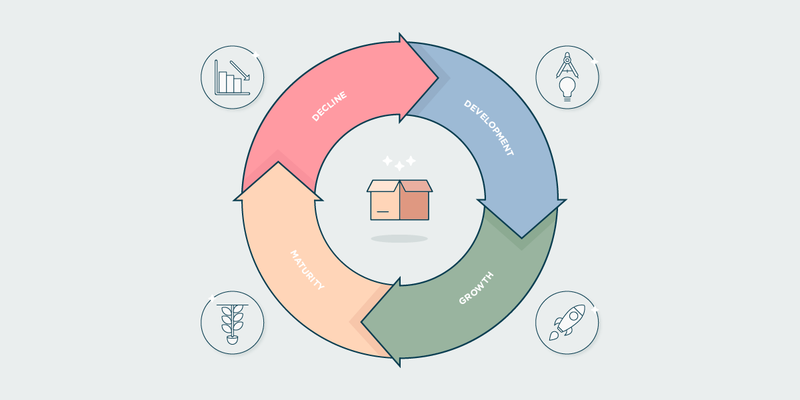
In simple words, the Product Life Cycle shows how a product moves through five important stages:
Development
Introduction
Growth
Maturity
Decline
Each stage has different challenges, different levels of demand, and different types of strategies. When businesses understand these stages, they can manage products more smartly and reduce risks. In this guide, we will explore each stage in easy and simple English so that anyone can understand it clearly.
Stage 1 – Product Development
The Product Development stage is where everything begins. This is the stage before a product is launched in the market. It involves planning, researching, and building the product.
What Happens in This Stage
During the development stage, companies work on the following activities:
Idea Generation: A new idea is born based on customers’ needs or market opportunities.
Market Research: Businesses study whether people need the product and who the target customers are.
Product Design: Teams design how the product will look and function.
Prototyping: A sample or model is created to test the features.
Testing: The product is tested to check if it solves the problem and works smoothly.
Modifications: Based on feedback, improvements are made.
No Sales Yet: At this stage, the product does not bring any revenue.
Key Challenges
The development stage has many challenges:
High costs
High risk
Uncertain market response
Time-consuming development
Strategies to Succeed
To succeed in the development stage, businesses should:
Do deep market research
Create user-friendly designs
Test early and often
Manage budget carefully
Build a skilled team
Stage 2 – Introduction
Once the product is ready, it enters the Introduction stage. This is when the product is launched in the market.
What Happens in This Stage
Product launch
Slow sales
High marketing costs
Limited competition
Initial distribution
Key Challenges
Low consumer awareness
High promotion costs
Customer hesitation
Competitors may copy
Strategies to Succeed
Strong branding
Engaging marketing
Introductory offers
Educate customers
Focus on quality
Stage 3 – Growth
The Growth stage is when the product becomes popular and sales increase rapidly.
What Happens in This Stage
Fast sales growth
Higher profits
Increased demand
New competitors
Wider distribution
Key Challenges
Competition increases
Price pressure
Quality maintenance
Higher customer expectations
Strategies to Succeed
Improve the product
Expand distribution
Offer loyalty programs
Increase advertising
Strengthen brand identity
Stage 4 – Maturity
The Maturity stage is when the product reaches peak sales and the market becomes saturated.
What Happens in This Stage
Peak sales
Stable demand
Strong competition
Price competition
Slow growth
Key Challenges
Market saturation
Reduced profit margins
Lack of differentiation
Decreasing customer interest
Strategies to Succeed
Rebranding
Add new features
Competitive pricing
Explore new markets
Promotions and discounts
Stage 5 – Decline
The Decline stage happens when customer demand falls and the product becomes less popular.
What Happens in This Stage
Falling sales
Lower profits
New technology replaces it
Reduced customer demand
Low marketing efforts
Key Challenges
Excess inventory
Rising costs
Losing customers
Pressure to discontinue
Strategies to Manage Decline
Discontinue the product
Reduce costs
Focus on loyal customers
Upgrade or replace the product
Sell in niche markets
Real-World Examples of the Product Life Cycle
Mobile Phone Models
Each model goes through all PLC stages — development to decline.
CDs and DVDs
They were once popular but declined with digital streaming.
Cable TV
Demand dropped as people shifted to YouTube and OTT platforms.
Why Understanding PLC Helps Businesses Grow
Better planning
Improved marketing
Smarter decisions
Reduced risk
Encourages innovation
Conclusion
Every product goes through the five main stages of the Product Life Cycle: development, introduction, growth, maturity, and decline. Each stage requires unique strategies and smart decisions. Businesses that understand these stages can manage products better, reduce risks, and stay competitive in the market.





Top comments (0)